
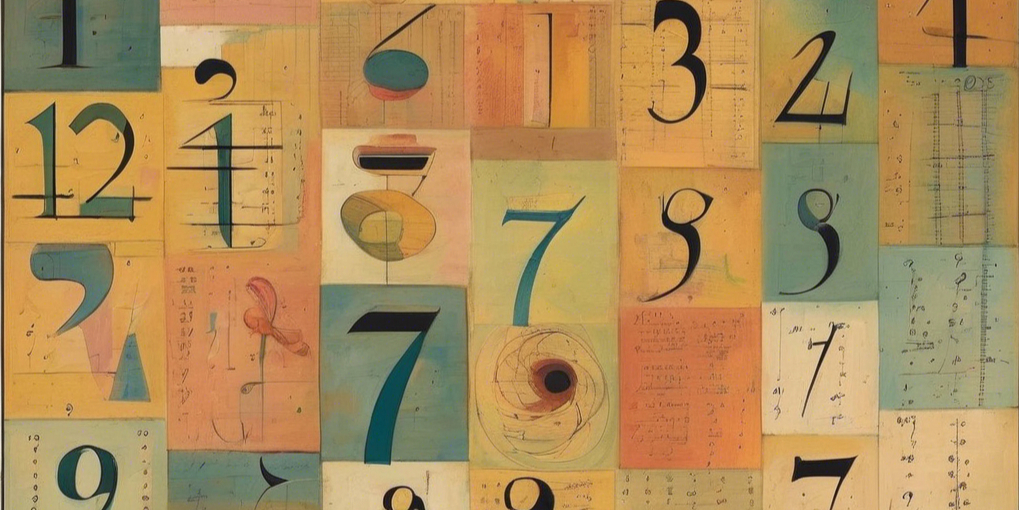
Numerology, the study of numbers and their influence on life and the universe, has been practiced for thousands of years. From ancient civilizations to modern applications, its significance has endured, adapting across cultures and philosophies.
Ancient Beginnings: India, China, Babylon, and Egypt
The origins of numerology can be traced to ancient India, where Vedic traditions used numbers to reveal life paths and karmic patterns. Numbers played a role in rituals, ceremonies, and spiritual practices, ensuring alignment with cosmic energies.
In China, numerology was integral to concepts of balance and destiny. The number eight, associated with prosperity, was widely used in business and architecture, while the number four was avoided due to its phonetic similarity to the word for “death.”
Babylonian numerology linked numbers to celestial bodies, using them for divination and decision-making. The Egyptians viewed numbers as magical, integrating them into spiritual practices and architectural wonders like the pyramids, which aligned with celestial events.
Western Influence: Pythagorean Numerology and Classical Thought
In the Western world, numerology gained prominence through the Greek philosopher Pythagoras (c. 550 BCE), who believed numbers revealed the harmony of the universe. His concept of the “music of the spheres” linked celestial movements to numerical order, influencing later thinkers like Plato. Pythagorean numerology, the system attributed to him, assigned specific meanings to numbers and laid the foundation for modern numerological interpretations. His belief that numbers contained intrinsic vibrational properties contributed to their widespread use in both mysticism and mathematics.
Numerology in Religious and Mystical Traditions
Numerology appears throughout religious texts, such as the Bible, where numbers like seven symbolize completeness, and forty denotes periods of transformation. The practice of gematria, which assigns numerical values to letters, emerged in ancient Assyria and influenced early Christianity, Judaism, and Islamic philosophy.
During the Middle Ages and the Renaissance, scholars like Albertus Magnus and Heinrich Agrippa preserved numerological knowledge, incorporating it into alchemy, astrology, and mysticism. This period reinforced the belief that numbers could reveal deeper truths about the natural and spiritual worlds. The esoteric traditions of the Kabbalah also placed significant emphasis on numerology, using it as a tool to decode hidden meanings in sacred texts.
Renaissance Revival and the Expansion of Numerology
The Renaissance period saw a resurgence in numerology as scholars revisited ancient wisdom and sought new ways to integrate it into art, science, and philosophy. Figures like Leonardo da Vinci and Michelangelo applied numerological principles to their works, believing that mathematical harmony was reflective of divine perfection. The Vitruvian Man, a famous illustration by da Vinci, demonstrates the application of numerical proportions to human anatomy, mirroring the belief that numbers govern all aspects of life and existence.
Modern Revival and New Age Integration
In the 19th and 20th centuries, numerology gained renewed interest through the New Thought Movement and the work of Dr. Julian Stenton, who coined the term “Numerology.” The practice expanded into personal growth, self-help, and holistic spirituality, further popularized by figures like Louise Hay and Deepak Chopra.
Today, numerology is widely used in personal development, branding, and even corporate decision-making. Social media, digital platforms, and online tools have introduced the practice to a new generation seeking insight into their identities and life paths. Companies and entrepreneurs frequently consult numerological interpretations when choosing brand names, launch dates, and business strategies to align with favorable numerical vibrations.
The Everlasting Influence of Numerology
From its roots in ancient civilizations to its modern applications, numerology has remained a dynamic and influential practice. Across centuries and cultures, numbers have provided insight into the universe and the self, reinforcing the idea that numerology is far more than superstition—it is a timeless tool for understanding life’s mysteries. As interest in self-discovery and spiritual alignment grows, numerology continues to evolve, offering new avenues for exploration and insight. Future discussions will delve deeper into specific numerological methods, historical applications, and their relevance in today’s fast-paced world.
 The Inner Profile Chart
Leave a comment